Personify Health · 2024–Present
An in-progress look at the design process behind Personify Health's most ambitious product initiative — shifting from a rewards-driven platform to a clinically grounded, personalized wellbeing experience.
Personify Health's platform has traditionally motivated members through external rewards — points, incentives, challenges. The Personalized Wellbeing Plan is an effort to move beyond that model. The goal is to guide members toward more impactful health decisions by meeting them where they are in their readiness to change, building health literacy over time, and helping them see the real impact of their health choices.
In practice, that means evaluating a member's whole-body health and giving them a plan focused on the health domains most relevant to them — rather than asking them to navigate a broad platform and figure out what matters on their own. Behavioral change models and AI are the primary mechanisms for doing this in a way that feels personal rather than generic.
I lead design for the end-to-end experience, with a focus on ensuring the core experience and the clinical outcomes we're aiming for stay at the forefront of the design process — including as we work with an external consultancy to re-envision the longer-term platform redesign.
We started with research across both engaged and disengaged users to understand how members think about their health and goals today — not what we assumed, but what was actually top of mind for them. This grounded the direction in real member mental models before we started designing anything.
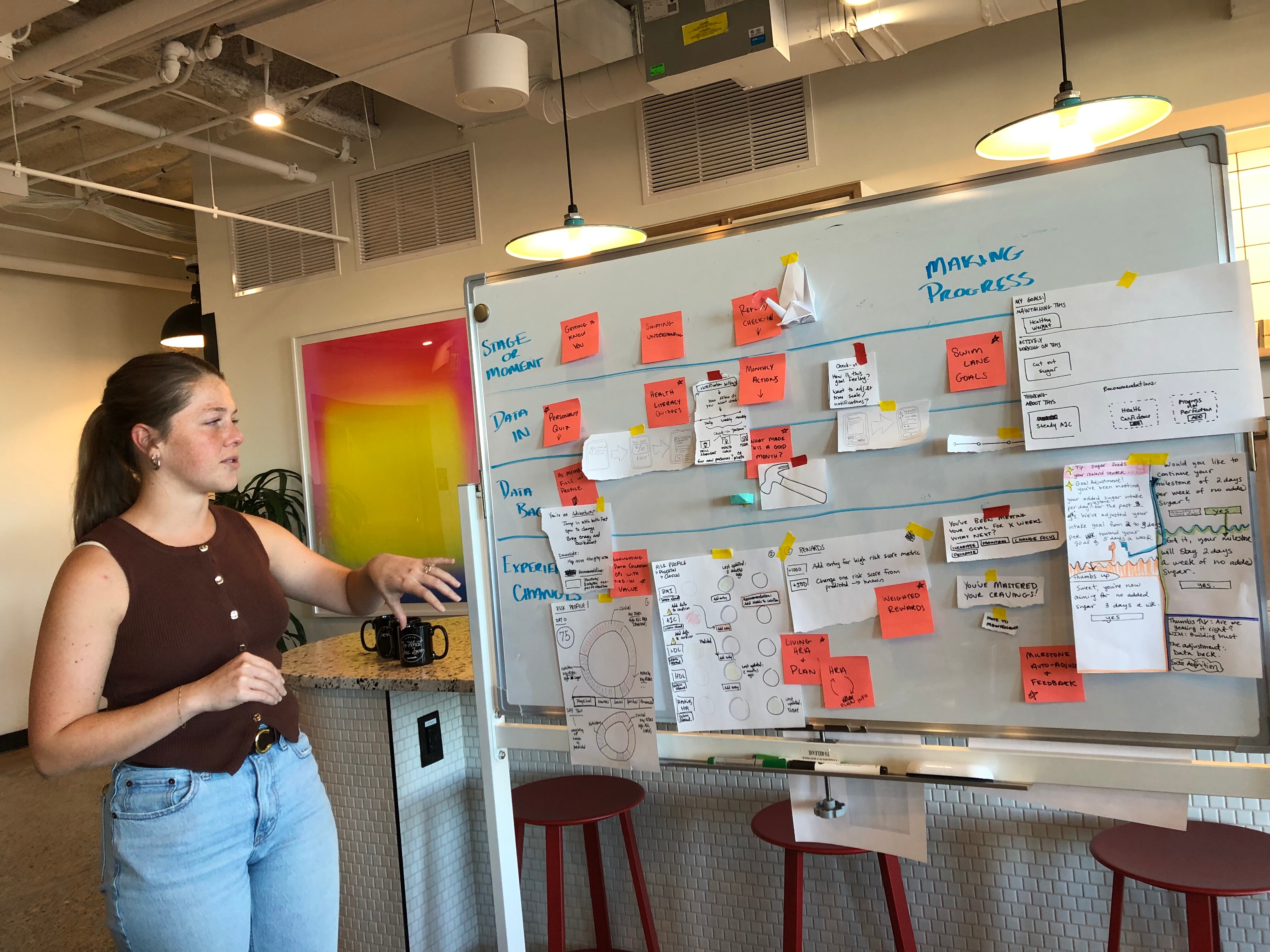
Helped facilitate a week-long, in-person cross-functional workshop to collectively explore what this experience could look like across the various user personas we'd developed. Getting clinical, product, content, engineering, and design in the same room for an extended session was critical for something this complex — the personas and behavioral change framework had to make sense to everyone, not just design.
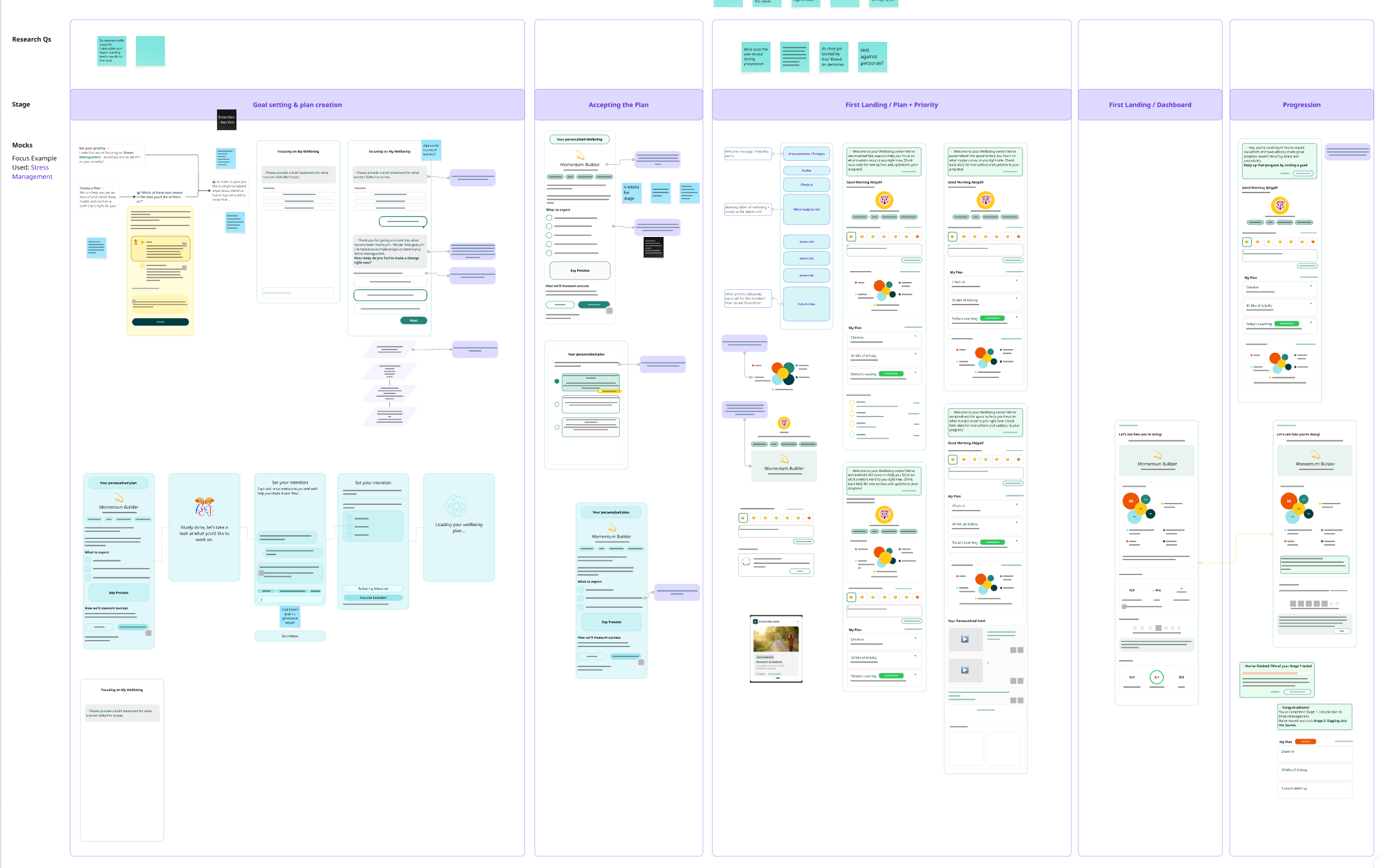
Working with another designer, we spent several weeks digging into the different use cases and user flows — mapping the full range of paths and narrowing to a key flow that could realistically be built. From there, rapid iteration on designs and plan configurations, with stakeholder check-ins throughout.
Tested prototypes across several core areas: the onboarding flow, the main plan page, dashboard insights, and AI-assisted goal setting. Feedback from testing directly shaped the MVP scope and feature prioritization.
After significant organizational changes at the start of the year, the team pivoted to an MVP scoped to physical activity — launching internally for company feedback first, then with select clients by end of summer. The remaining six health focus areas are planned for end of year.
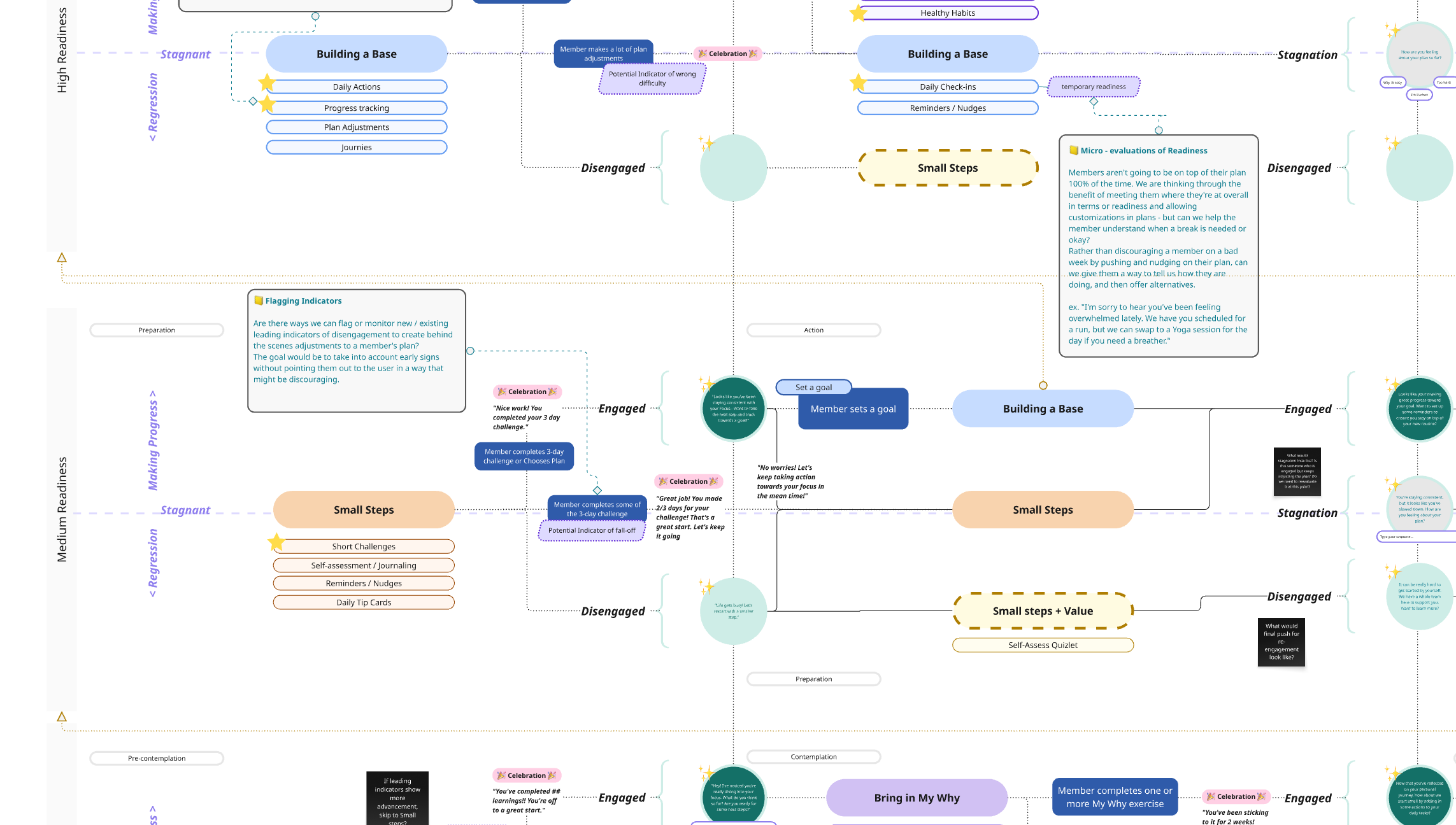
User flow mapping and iteration.
This project has required designing within — and around — a lot of real constraints. The existing design system wasn't built for this type of personalized, clinically grounded experience, which is part of why there's a separate consultancy engagement for the platform redesign running in parallel. In the meantime, the MVP has to work within what exists today.
The broader context hasn't made it simpler: the team has navigated org shifts, leadership changes, team reorganizations, and a reduction in UX resources over the course of this project. There's also an active push to integrate AI into the design workflow, which the team is still learning to use effectively. Keeping the core clinical and experiential vision intact through all of that has been a consistent part of my role.
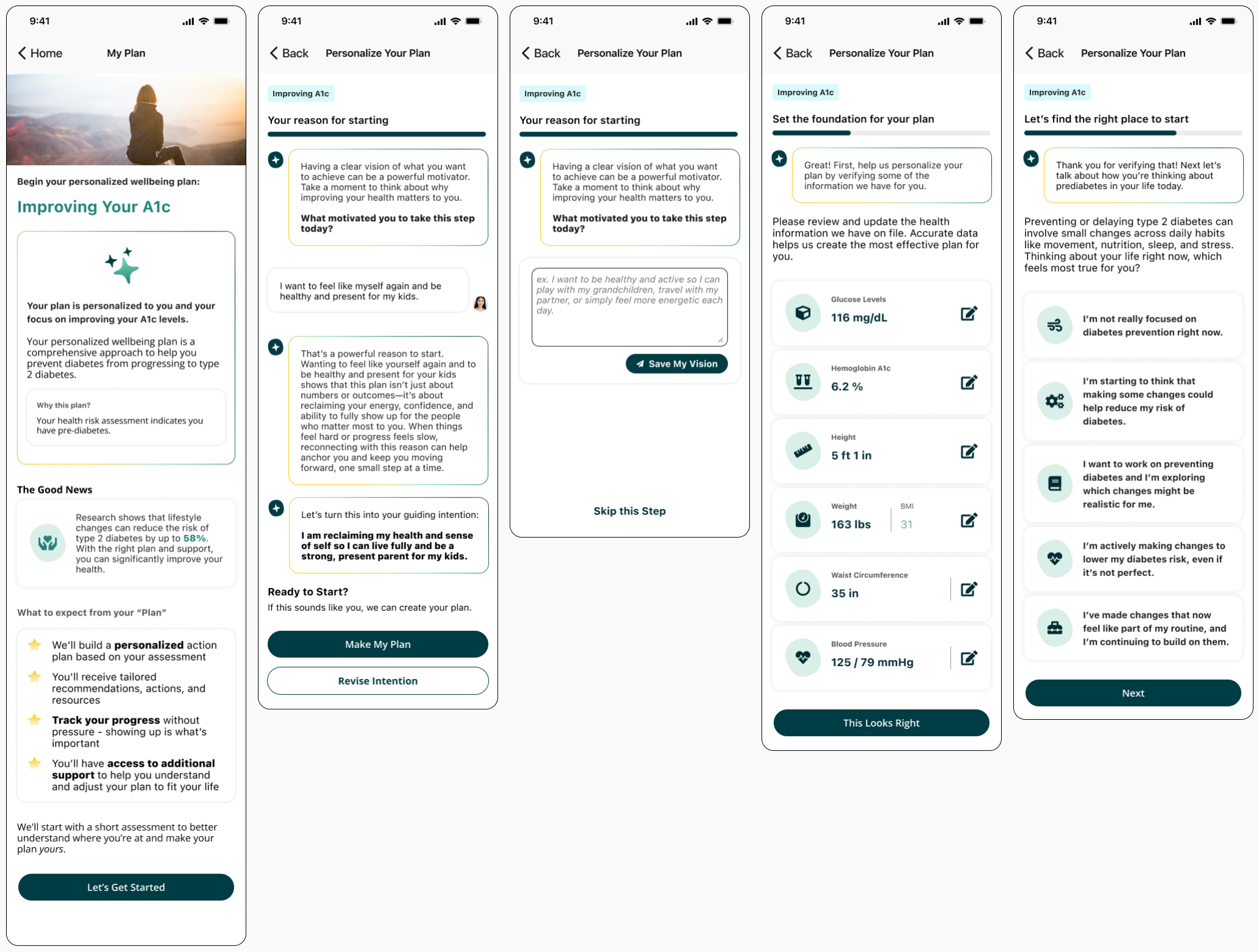
Onboarding flow design.
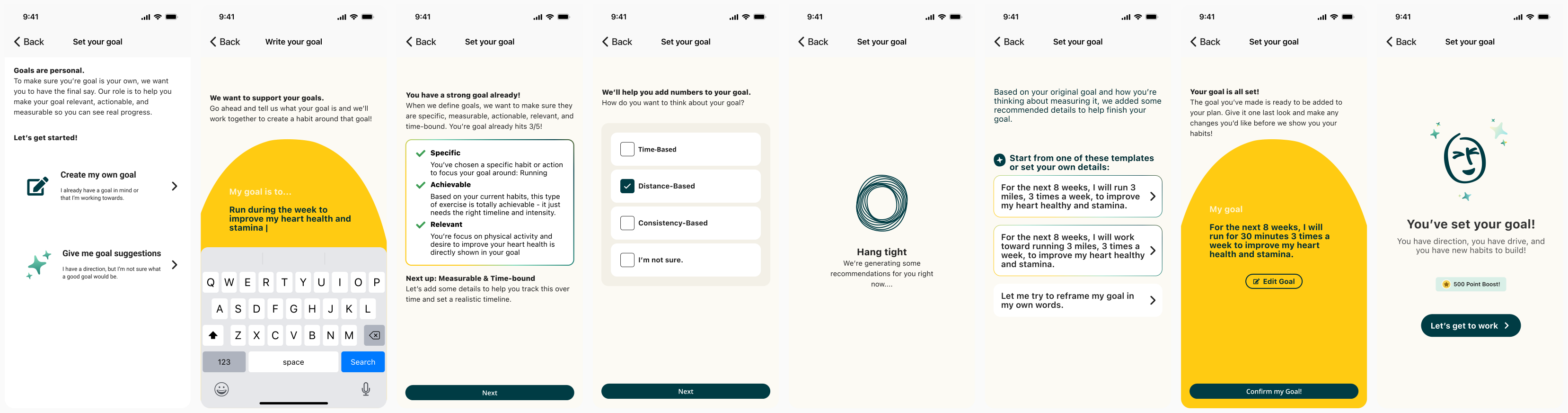
AI-assisted goal setting prototype.

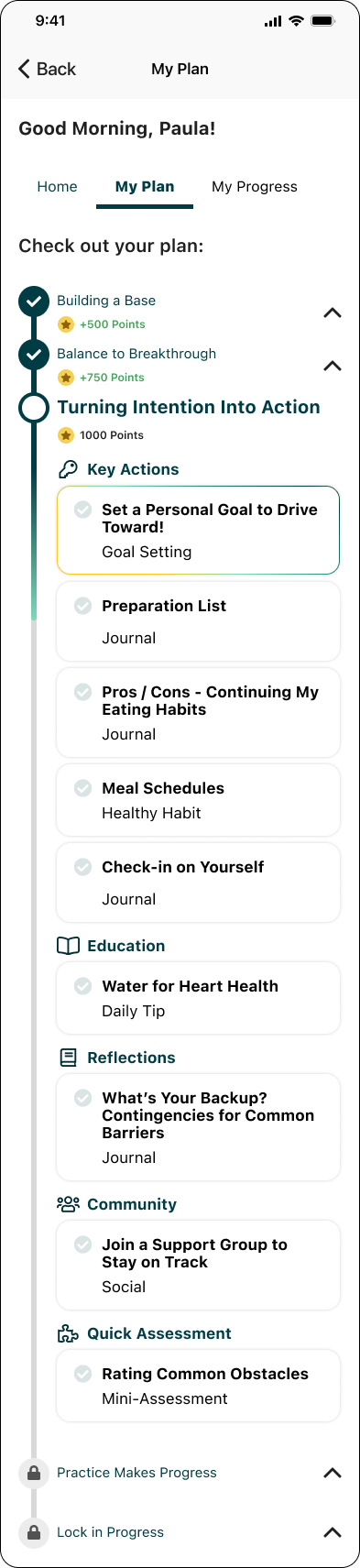
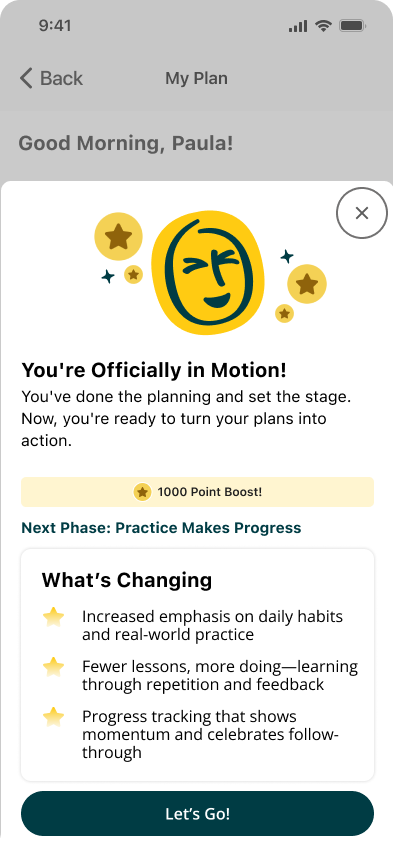
Stages of change framework informing plan personalization.
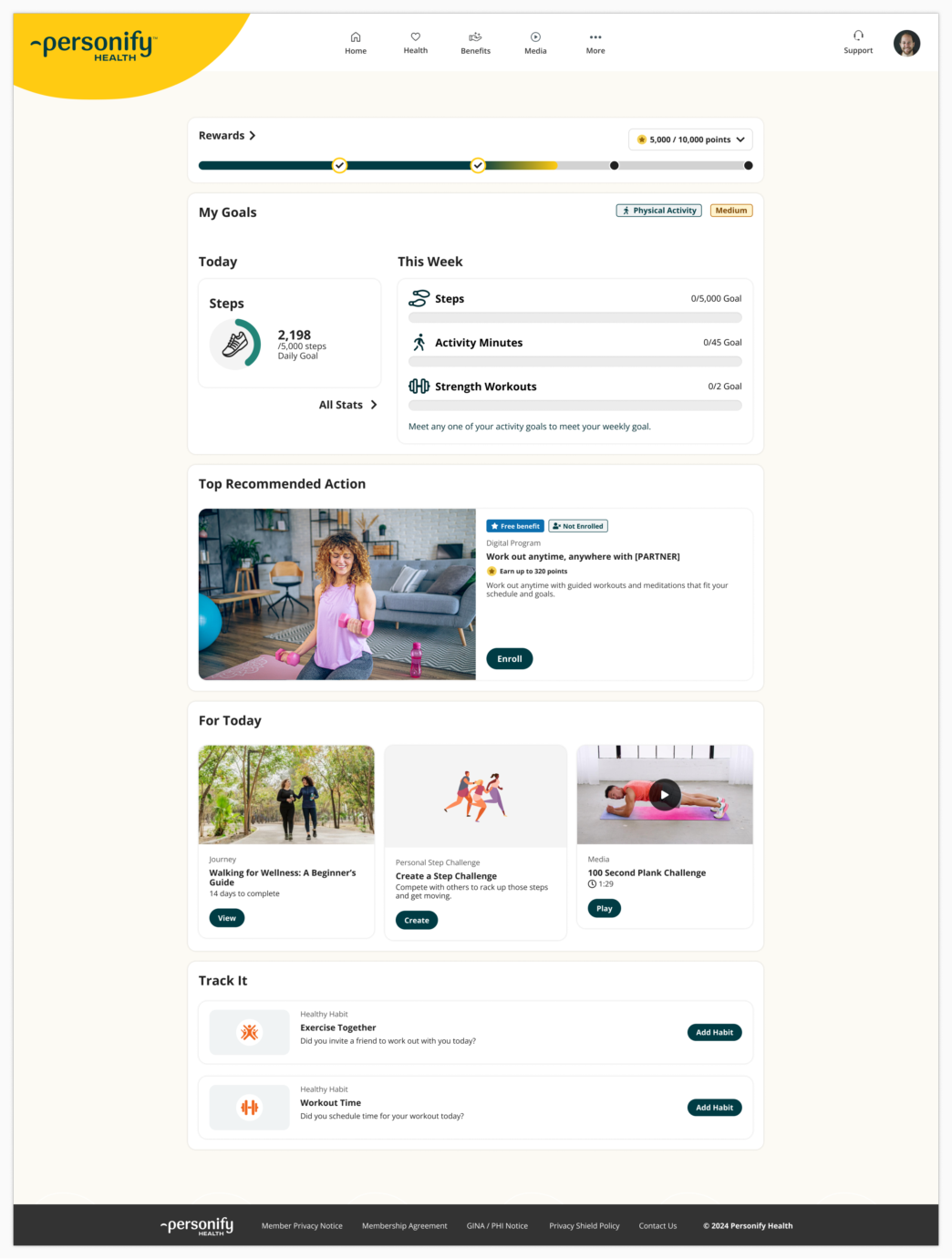
What shipped — web.
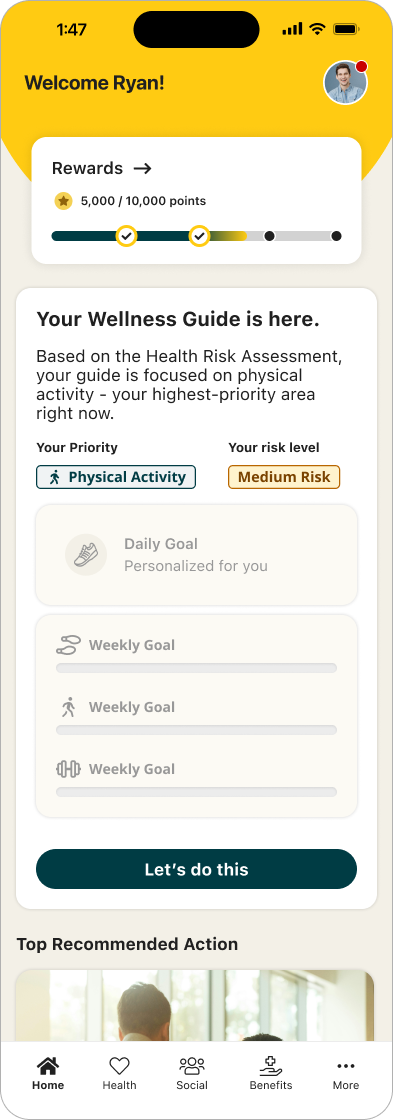
What shipped — mobile.